THE RULE
The filter goes on the front
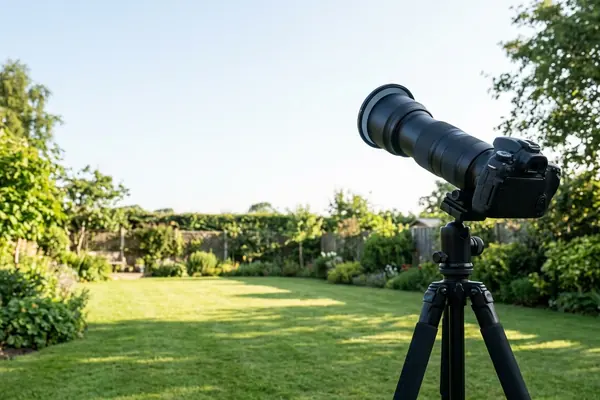
NASA says viewing the bright Sun through a camera lens without a special solar filter secured over the front will instantly cause severe eye injury.
Check your set-up jtechphotography
00WHAT ECLIPSE EXPERTS SAY
A partial eclipse is still blindingly bright.
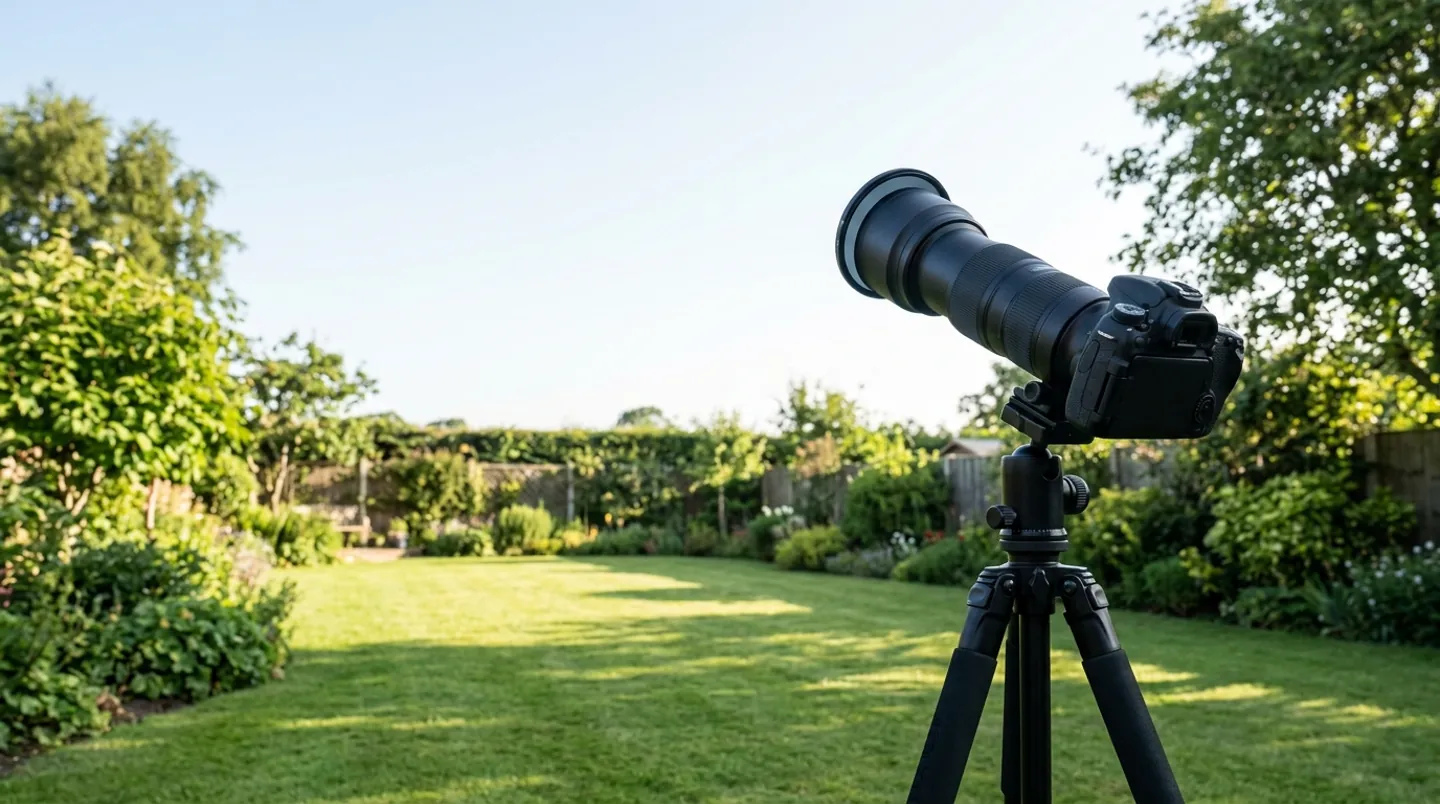
From the UK, the eclipse of 2 August 2027 will cover only part of the Sun, so eyes, phones and cameras all need protection the whole time. Astronomers' advice comes down to one rule: a proper solar filter, on the front of the optics.
Check your set-up01Principles
02THE SHORT ANSWER
Outside totality, the Sun is never safe to view unfiltered.
From the UK in 2027, there is no totality at all.
THE RULE
NASA says viewing the bright Sun through a camera lens without a special solar filter secured over the front will instantly cause severe eye injury.
Check your set-upPHONES
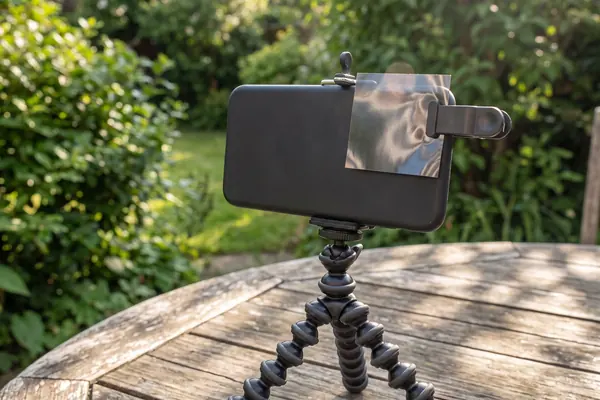
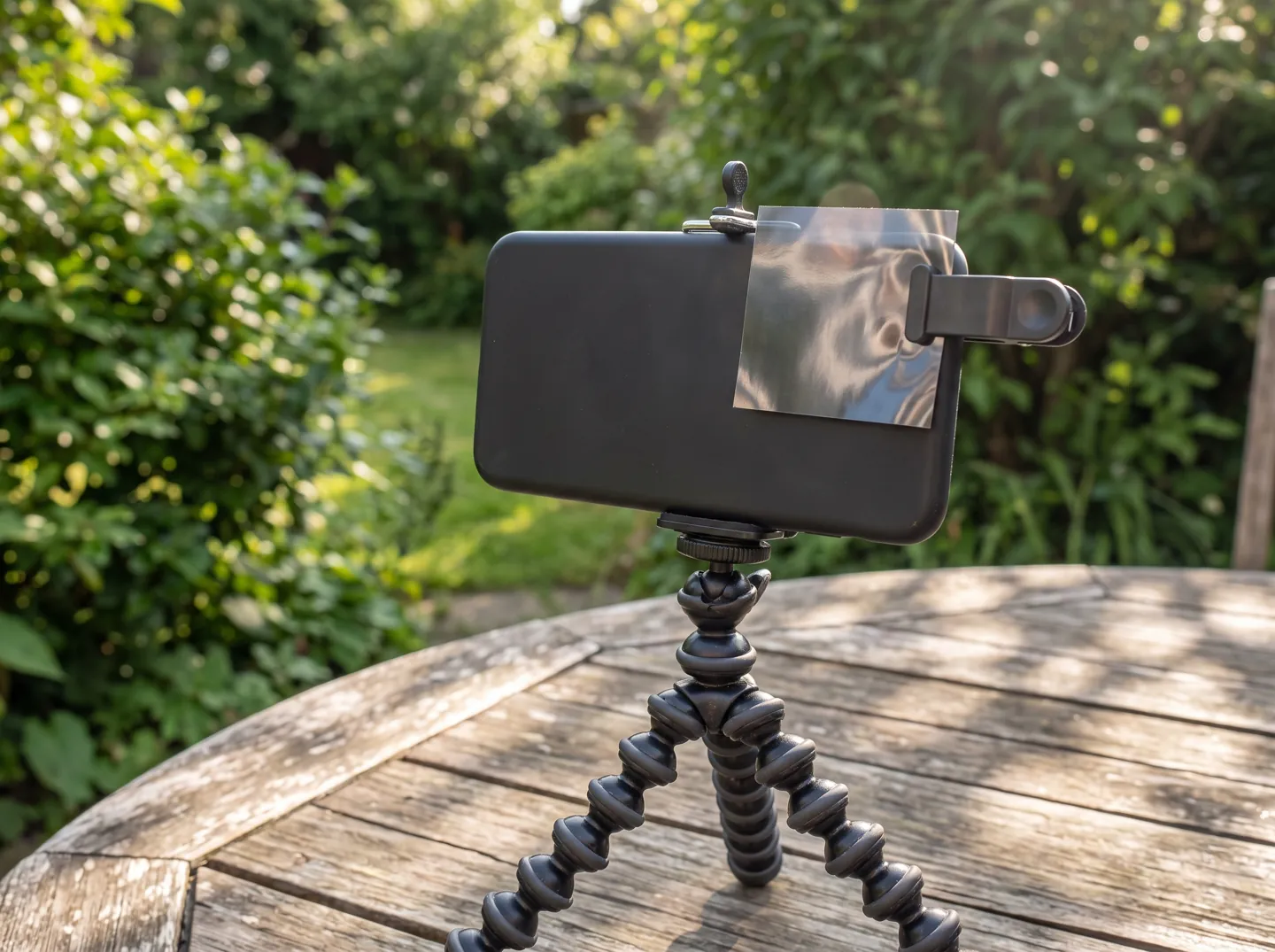
The British Astronomical Association warns that pointing a phone or camera at the Sun may ruin the sensor. Smartphone solar filters exist for this.
How to shoot itNO KIT?
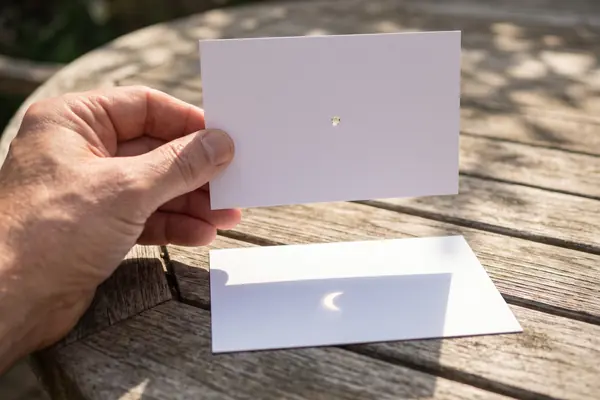
A pinhole in a card projects an image of the Sun onto another surface. Photograph the projection, never the Sun through the pinhole.
Low-tech options03A QUICK SET-UP CHECK
Pick a set-up to see what NASA and astronomy groups say about it during a partial eclipse. The bar shows the risk.
Based on NASA, American Astronomical Society and British Astronomical Association guidance. General information, not medical advice.
04TWO NUMBERS WORTH KNOWING
One figure on how much of the Sun the Moon will cover,
one on the lens you need for a big Sun.
≈ 42%
Share of the Sun covered at maximum
UK Eclipse says about 42% of the Sun will be covered from London, 44% from Southampton and 28% from Glasgow, with maximum at around 10am.
2 AUGUST 2027 · LONDON
300 mm+
Focal length for a moderately large Sun
The American Astronomical Society says a normal or wide lens makes the Sun tiny; you need at least 300 mm (35 mm equivalent) for a moderately large solar image.
LENS SIZE · AAS
After 2027, the British Astronomical Association lists a partial eclipse on 26 January 2028, with about two thirds of the Sun covered from the UK.
05FOUR STEPS TO TRY
The AAS advice for a partial or annular eclipse is to rehearse on an ordinary sunny day, with the filter in place, so eclipse morning holds no surprises.
Use a special-purpose solar filter over the front of the lens, and over the viewfinder if the camera has no through-the-lens view.
The AAS suggests manual mode, ISO 100 or 200, f/8 and short exposures of roughly 1/500 to 1/4000 second, then picking the best.
Focus manually on the Sun's edge or any sunspots, then tape the focus ring (and zoom ring) so they cannot drift.
Use a solid tripod, and turn on bracketing if you have it to allow for haze and the Sun's changing height.
06NO CAMERA KIT?
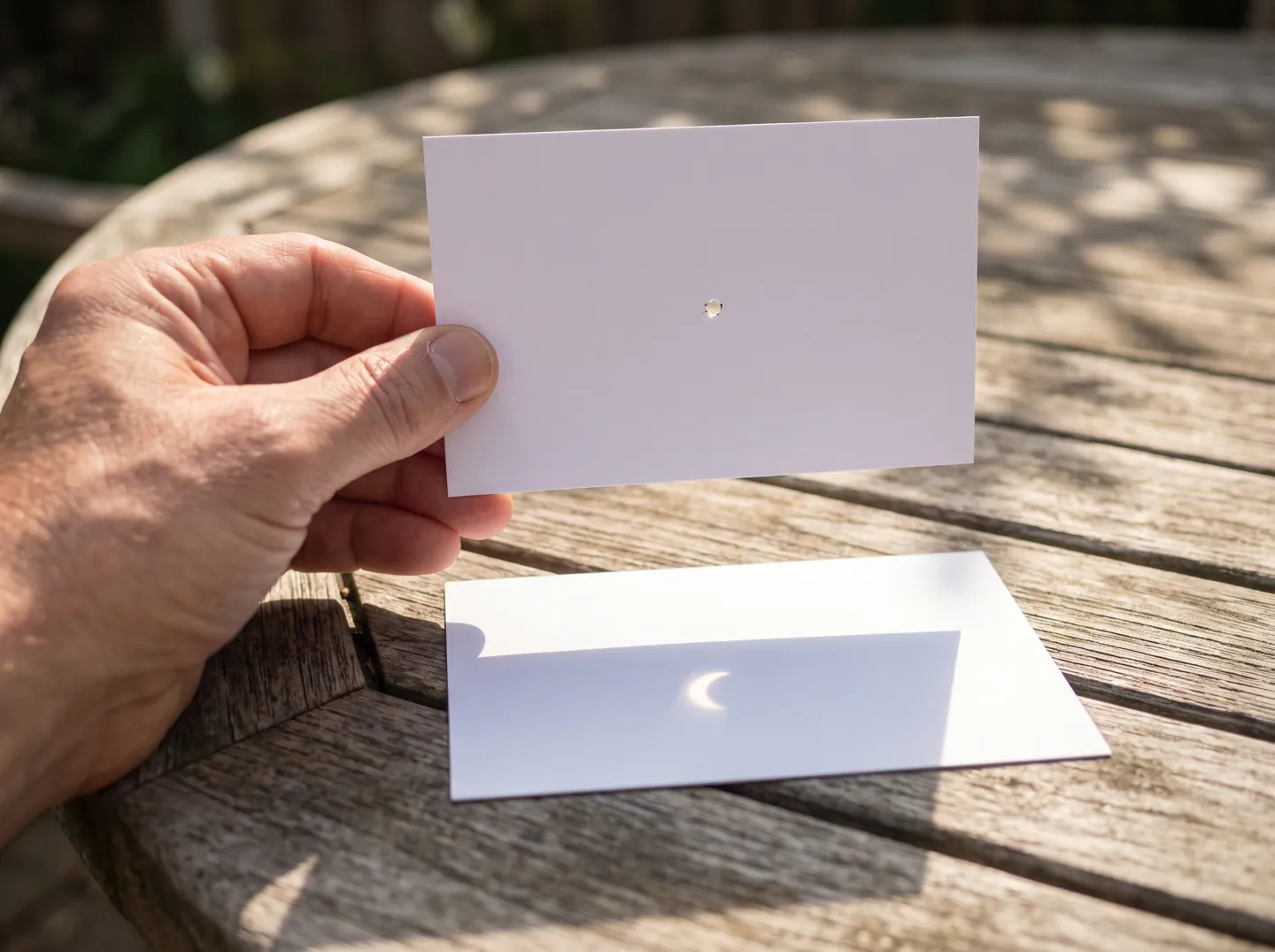
NASA describes a simple pinhole projector: a small hole in a card throws an image of the Sun onto a surface, with the Sun at your back. A box version with foil and white paper works the same way.
UK Eclipse notes that gaps between the leaves of a tree act as natural pinholes, casting many little crescents on the ground. These make a safe picture, because the camera never points at the Sun.
07Questions
Yes, with protection. The BAA says phones and cameras need protecting from the Sun, and the AAS points to solar filters made for smartphones. Without one, photograph a pinhole projection instead.
NASA says eclipse glasses and handheld viewers should not be used with cameras, binoculars or telescopes, which need their own solar filters attached to the front.
Only during totality, when the Moon covers the Sun's bright face completely. From the UK on 2 August 2027 the eclipse is only partial, so the filter stays on throughout.
For the bright partial phases the AAS suggests testing manual mode at ISO 100 or 200 and f/8, with exposures roughly between 1/500 and 1/4000 second, on the plain Sun beforehand.
UK Eclipse gives roughly 9am to 11am BST on Monday 2 August 2027. From London it begins at 9:03am, peaks at 10:00am and ends at 10:59am.
08Sources
ABOUT THIS NAME
jtechphotography.com is part of the DoodleSale portfolio. It isn't in an auction right now, but you can ask about leasing it.